
Loyola's Lambda Law Alliance Celebrates Black History Month

This Black History Month, Loyola Lambda Law Alliance wanted to highlight and honor the many important Black figures in our history and today, both part of the LGBTQ+ community and not. Black History Month was created to focus on the many contributions of Black people to the United States and the fundamental roles they have played in our history and our lives today. Below is a list of ten Black figures in American history ranging from the 1800s to today, detailing their lives and accomplishments. Happy Black History Month!

Shirley Chisholm
Shirley Chisholm was the first Black woman in Congress and the first woman and Black person to seek the nomination for president of the United States from one of the two major political parties. Chisholm was born in Brooklyn, NY in November of 1924, the oldest of four to immigrant parents. She graduated cum laude from Brooklyn College in 1946, and though she was encouraged by professors to pursue a political career, she replied that she was doubly held back from politics by being both Black and a woman. She instead went on to work as a nursery school teacher and got her masters in early childhood education from Columbia University in 1951. She became involved in local chapters of the League of Women Voters, the NAACP, the Urban League, and the Democratic Party club in Brooklyn.
It was 1964 when Chisholm got her foot in the door, running for and becoming the second Black person in the New York State Legislature. In 1968, after her neighborhood became heavily Democratic due to court-ordered redistricting, she ran for a seat in Congress and won. While in office, she earned the nickname “Fighting Shirley,” and introduced more than 50 pieces of legislation. She championed racial and gender equality, the plight of the poor, and ending the Vietnam War. She was a co-founder of the National Women's Political Caucus in 1971. In 1977, Chisholm became the first Black woman and second woman ever to serve on the House Rules Committee.
She faced a lot of discrimination on her quest for the Democratic nomination for president in 1972, being blocked from televised primary debates and, only after taking legal action, was only permitted to make one speech. Still, she inspired many and garnered 152 of the delegates’ votes (10% of the total) despite all of the hurdles put in place. She retired from Congress in 1983 and returned to education. Though she faced more barriers in her return to education from political opponents and others who did not wish for her to have a higher position in schools, she continued to teach. President Bill Clinton nominated Chisholm for the U.S. Ambassador to Jamaica in 1993, but she could not accept due to her health and declined the nomination. She passed away in 2005. Of her legacy, Chisholm said, “I want to be remembered as a woman … who dared to be a catalyst of change.”
Source: https://www.womenshistory.org/education-resources/biographies/shirley-chisholm

Claudette Colvin
Many are familiar with the story of Rosa Parks, who refused to move to the back of the bus and give up her seat to a white person. Fewer people know that Claudette Colvin did the same thing- nine months before Rosa.
Colvin was born in September of 1939 in Montgomery, Alabama. She grew up in one of Montgomery’s poorest neighborhoods, but studied hard to earn mostly A’s as she aspired to become president one day. In March 1955, she was on a bus after school when the bus driver told her to give up her seat for a white passenger; she refused and said “It's my constitutional right to sit here as much as that lady. I paid my fare, it's my constitutional right.” Speaking later of the event, she was quoted as saying “I felt like Sojourner Truth was pushing down on one shoulder and Harriet Tubman was pushing down on the other—saying, 'Sit down girl!' I was glued to my seat.” Colvin was arrested on several charges for refusing to give up her seat, including violating the city’s segregation laws. She sat in jail for hours before her minister paid her bail, after which she went home unable to sleep for fear of retaliation for her actions. The NAACP initially considered using Colvin’s story to challenge the segregation laws, but decided against it due to her age (she was 15) and because she became pregnant (having a son in March 1956) and they believed an unwed young mother would cause too much negative attention.
In Court, Colvin was put on probation, but could not escape the court of public opinion which branded her a troublemaker, causing her to drop out of college and find it impossible to get a job. Despite this, she became a plaintiff in the Browder v. Gayle case, along with Aurelia S. Browder, Susie McDonald and Mary Louise Smith. The 1956 case ruled that Montgomery's segregated bus system was unconstitutional. After, Colvin moved to New York City where she went on to work as a nurse’s aide at a Manhattan nursing home. She retired in 2004 and is still alive today at 83 years old. In 2021 she took action to get her 1955 arrest expunged and had her wish granted. A biopic about Colvin was announced to be in the works in 2022.
Sources: https://www.biography.com/activist/claudette-colvin; https://www.distractify.com/p/claudette-colvin-now

Thurgood Marshall
Thurgood Marshall was the first Black person to serve as an associate justice on the United States Supreme Court after his appointment in 1967. Marshall was born in July 1908 in Baltimore, Maryland. He was an above-average student in high school and star of the debate team. He was a little rebellious and actually ended up memorizing the entire Constitution as a punishment from one of his teachers. After graduating in 1926, he went on to attend Lincoln University, a historically Black college, where he graduated with honors in 1930. He applied for the University of Maryland Law School and was rejected despite being overqualified academically because of his race. He went on to attend law school at Howard University, another historically Black school. The dean of Howard at the time was Charles Houston, the pioneering civil rights lawyer. Marshall became a mentee of Houston during his time at Howard.
Marshall graduated magna cum laude in 1933 and briefly tried to establish his own practice before that fell through due to his lack of experience. In 1934 he worked for the Baltimore branch of the NAACP then moved to NYC in 1936 to work full time as a legal counsel for the NAACP. For several decades he went on to argue and win numerous cases to strike down legalized racism, the most well-known of these achievements being the Brown v. Board of Education case which established Marshall as a successful and prominent lawyer in the US. In 1961, Marshall was appointed by President JFK to be a judge for the US Second Circuit Court of Appeals. Four years later in 1965 he was appointed by President Lyndon B. Johnson to serve as the first Black US solicitor general and during his two years in that position he won 14 of the 19 cases he argued to the Supreme Court.
In 1967, President Johnson nominated Marshall to be on the Supreme Court and later that year he was sworn in and became the first Black person to serve on the Court. During his time on the Court he consistently ruled in favor of upholding individual rights and had a liberal interpretation on controversial social issues, such as when he ruled in favor of abortion rights in the 1973 Roe v. Wade case. During the end of his tenure he became an isolated liberal figure on the Court and was relegated to articulating his opinion in dissents until his retirement from the Court in 1991, after which he was replaced with Clarence Thomas, a conservative judge. Marshall passed away in 1993 at the age of 84.

Charles H. Houston
Charles Hamilton Houston was born in September 1895 in Washington, D.C. He graduated from Amherst College as one of six valedictorians in 1915. He taught for two years at Howard University before enlisting in the racially segregated US Army where he served as a First Lieutenant in World War I in France. His military experience made him determined to study law and “fight[ing] for men who could not strike back.” Houston returned to the US in 1919 and entered Harvard Law School where he became the first Black editor of the Harvard Law Review. He graduated in 1923, then went on to study civil law at the University of Madrid in 1924. He was admitted to the bar in D.C. and practiced law with his father until 1950.
From 1929 to 1935, Houston served as a dean of Howard University Law School, where he expanded the part-time program into a full-time curriculum and mentored a generation of young Black lawyers, including Thurgood Marshall. Houston made significant contributions to the fight against racial discrimination, challenging Jim Crow laws and arguing several important cases to the Supreme Court while serving as legal counsel for the NAACP from 1935-1940. His legal strategy in the fight against school segregation was to unmask who the “separate but equal” principle was not true, as there were not many facilities for Black people that were equal to white facilities. Unfortunately, Houston did not live to see that principle be deemed unconstitutional in 1954, as he passed away in 1950 from a heart attack. He was posthumously awarded the NAACP Spingarn Medal in 1950 and the main building of the Howard University School of Law was named after him in 1958. Harvard Law School later named a professorship after him and in 2005, opened the Charles Hamilton Houston Institute for Race and Justice.
Sources: https://naacp.org/find-resources/history-explained/civil-rights-leaders/charles-hamilton-houston; https://www.britannica.com/biography/Charles-Hamilton-Houston

Jane Bolin
Jane Bolin was born in April 1908 in Poughkeepsie, New York to an interracial couple. Her mother passed away when Bolin was a child and her father, an attorney who headed the Duchess County Bar Association, cared for the family after her death. Bolin was a diligent student who graduated high school in her mid-teens and then went on to enroll in Wellesley College. She faced overt racism and isolation, but pushed through to graduate top of her class in 1928 with a BA. She then attended Yale Law School where she graduated in 1931, becoming the first Black woman to earn a law degree from the school. She worked at her family’s practice for a few years before moving to New York City.
Bolin campaigned unsuccessfully for a Republican state assembly seat before taking on assistant corporate counsel work in NYC. In July 1939 when Bolin was 31, she was called to appear at the World’s Fair before Mayor Fiorello La Guardia, who swore her in as a judge, making Bolin the first Black woman to become a judge in the United States. She was assigned to what would be known as Family Court where she took on many domestic issues and fought for the plight of children. She worked to change segregationist policies entrenched in the system and worked with first lady Eleanor Roosevelt to provide support for the Wiltwyck School which was a comprehensive, holistic program that aimed to eradicate juvenile crimes among young boys. Her first husband passed away in 1943 and she raised her son as a single mother for several years before remarrying.
Bolin was reinstated as a judge for three additional terms, each term being 10 years, during which time she served on the board of organizations including the NAACP and the New York Urban League. She retired from the bench at the age of 70 and continued to do more work before she passed away in 2007 at the age of 98.
Source: https://www.biography.com/legal-figures/jane-bolin
Henrietta Lacks
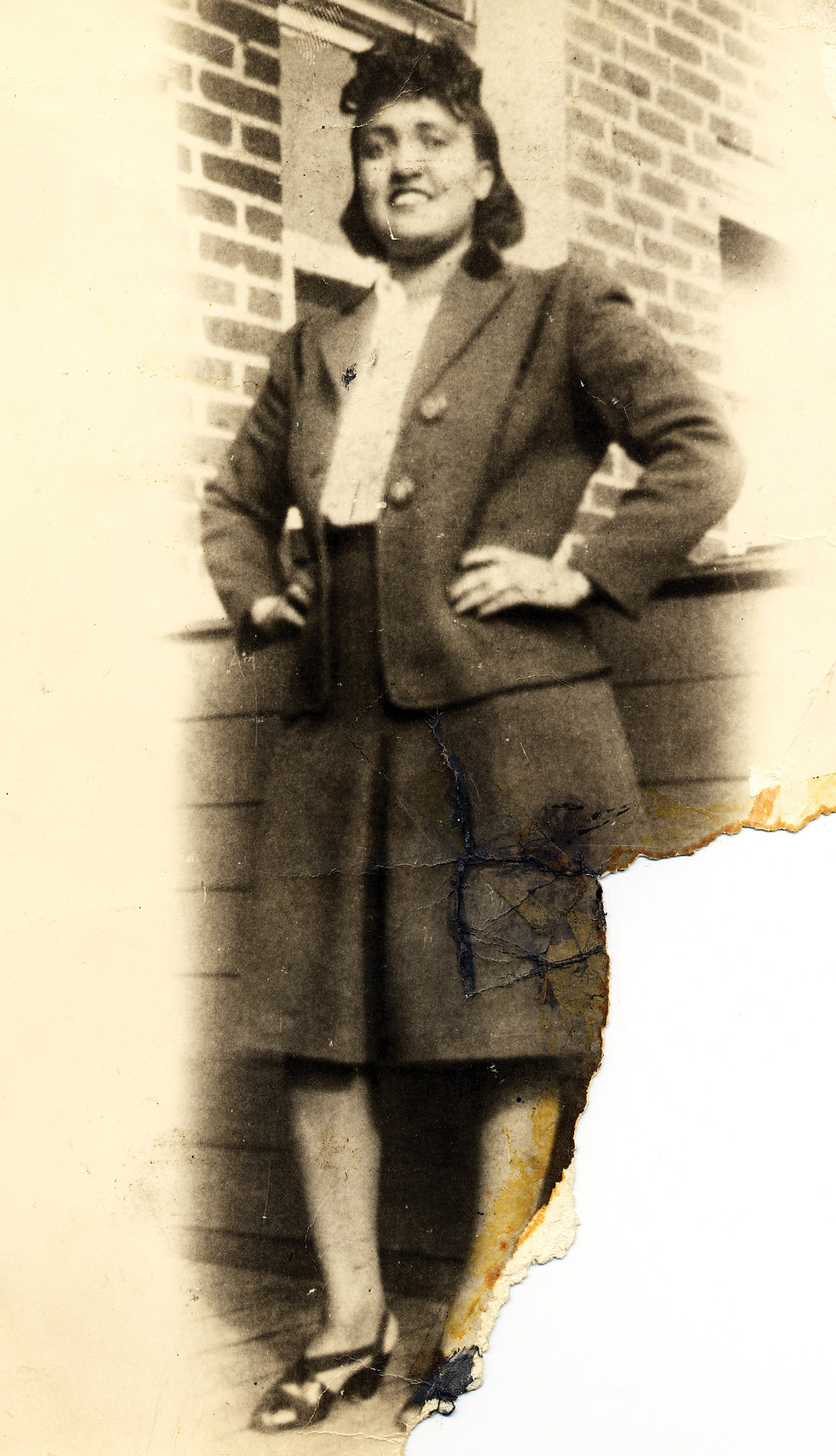
HeLa cells have been extensively used in medical research since the 1950s, yet many are not familiar with the story of the woman those cells were stolen from.
Henrietta Lacks was born in 1920 in Roanoke, Virginia. After her mother passed in 1924, Lacks and her 9 siblings were split among relatives to be raised and she was sent to live with her grandfather, who lived in a log cabin on what had been a plantation. She had her first child at the age of 14, then her second in 1939. She married in 1941 and had three more children. In January of 1951, Lacks went to Johns Hopkins Hospital due to abdominal pain and bleeding. A tumor was found on her cervix that had been missed during the birth of her last child only a few months before. She was quickly diagnosed with cervical cancer and began radiation treatments. It was during those treatments that the physicans, without her knowledge, removed cervical samples from her.
While her cells thrived, Lacks declined in health. The cancer spread throughout her body and she passed away in October 1951. Her cells continued to thrive after her death and revolutionized medical research, contributing to the development of drugs for numerous ailments, such as polio, Parkinson disease, and leukemia. Since then, over ten thousand patents involving HeLa cells have been registered. Despite this, Lacks’ involvement in these cells remained unknown even to her family until the 1970s. Organizations that profited from HeLa cells have since publicly acknowledge Henrietta Lacks and her unknowing contributions to medical research, however the Lacks family has been unsuccessful in gaining control of the HeLa strain. Her family has lived in poverty for many decades while her cells were being used and making people millions of dollars. Even today, there is more information known about her cells than there is about her life. In 2010, Dr. Roland Pattillo of Morehouse donated a headstone for Lacks' unmarked grave. More information on Henrietta Lacks and her family can be found in The Immortal Life of Henrietta Lacks by Rebecca Skloot.
Sources: https://www.biography.com/history-culture/henrietta-lacks; https://www.britannica.com/biography/Henrietta-Lacks

Bayard Rustin
Bayard Rustin was born in March 1912 in West Chester, Pennsylvania. His mother had had him young, and so he was raised believing his biological mother was his sister and his grandparents were his parents. For school, he attended Wilberforce University in Ohio, and Cheyney State Teachers College which were both historically Black schools. In 1937 he moved to New York City and attended City College of New York. He briefly became involved with the Young Communists League before resigned from the organization. During the Second World War Rustin worked for A. Philip Randolph where he fought against raciald discrimination in the war hiring. After meeting A. J. Muste, a minister and labor organizer, he also participated in several pacifist groups, including the Fellowship of Reconciliation.
Rustin became very politically involved. In 1947 he took part in protests against the segregated public transit system, which led to his arrest in North Carolina. He was also arrested in 1953 for a morals charge for publicly engaging in “homosexual activity,” though he still continued to live as an openly gay man. In the 1950s he met Dr. Marthin Luther King, Jr. and began working with him as a strategist and organizaer in 1955. He taught Dr. King about his nonviolent beliefs, which he combined from the pacifism of the Quaker religion, the non-violent resistance taught by Mahatma Gandhi, and the socialism espoused by labor leader A. Philip Randolph. In 1956 he assisted Dr. King with the boycott of segregated buses in Montgomery, then in 1958 he helped coordinate a march of 10,000 people in England to protest nuclear weapons. Most famously, Rustin played a very important role in organizing the March on Washington in 1963.
In his later years, Rustin continued to be politically and socially active, continuing his work with civil rights and and peace movements and was in demand as a public speaker. He also wrote and published in collections his writings on civil rights and received numerous awards and honorary degrees for his work. He passed away in August 1987 from a ruptured appendix at age 75.

Barbara Jordan
Barbara Jordan was the first Black person elected to the Texas Senate after the Reconstruction era and the first Southern Black woman elected to the United States House of Representatives. She was born in February 1936 in Houston, Texas. After graduating high school, she went on to get her BA from Texas Southern University in 1956 and then obtained a law degree from Boston University in 1959. She was admitted to the Massachusetts and Texas bars and began to practice law in Texas in 1960. She became employed as an administrative assistant to a county judge to supplement her income. In 1960 she worked on JFK’s presidential campaign and eventually helped manage a highly organized get-out-the-vote program that served Houston’s 40 Black precincts. Jordan ran for the Texas House of Representative sin 1962 and 1964, but lost both times. She ran again in 1966 and was more successful after redistricting created an area of largely minority voters. She defeated a white opponent and became the first Black state senator in the U.S. since 1883 as well as the first Black woman ever elected to that chamber.
The other white male senators received her coolly, but Jordan pushed forward and quickly earned a reputation as an effective legislator. She pushed through bills that established the state’s first minimum wage laws, anti-discrimination clauses in business contracts, and the Texas Fair Employment Practices Commission. In 1972, she was elected the president pro tempore of the Texas senate, making her the first Black woman in America to preside over a legislative body. One of the responsibilities of the position was to serve as acting governor when the governor and lieutenant governor were out of the state. When Jordan filled that largely ceremonial role in 1972, she became the first Black chief executive in the nation. In the race for the Texas congressional seat she said to a rally “I’m not going to Washington and turn things upside down in a day. I’ll only be one of 435. But the 434 will know I’m there.”
Despite only being in Congress for a short period, Jordan continued to work and speak throughout her life and was committed to helping others. She passed away in January of 1996 from pneumonia which was a complication of leukemia. Of her death, the New York Times wrote at the time: “She left Congress after only three terms, a mere six years. No landmark legislation bears her name. Yet few lawmakers in this century have left a more profound and positive impression on the nation than Barbara Jordan.”
Andrea Jenkins
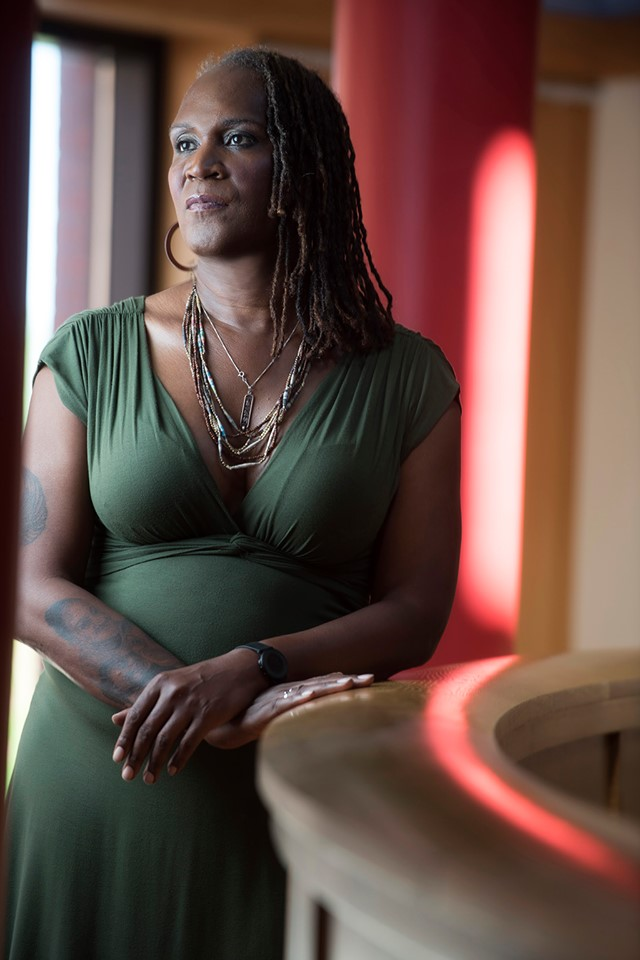
Andrea Jenkins is the first Black openly transgender woman elected to public office in the United States. She was born in May 1961 and grew up in Chicago. Her father battled addiction issues and spent most of Jenkins’ childhood in prison, so she grew up with a single mother. Her experiences with the low-income and hardworking neighborhoods contrast to upper middleclass neighborhoods in Chicago, along with her family’s history of migration from Alalbama, informed her life from a young age. She began writing poetry as she got older and believed that poetry could be, and should be, used for social justice.
In 1979, Jenkins attended the University of Minnesota which was overwhelmingly white at the time. It was there that she saw firsthand how different the resources and access to them was for white students and nonwhite students. She joined a fraternity, where one of the brothers, her roommate, outed her to the fraternity; she was expelled from the fraternity house and was forced to return to Chicago because she had nowhere else to live. While back in Chicago, she came out as bisexual, which she still identifies as. She finally began to work in politics at this time, working on Harold Washington’s mayoral campaign in 1983 which made him the first Black mayor of Chicago. She married a woman and had a daughter while in her mid-20s.
It wasn’t until she was 30 that she divorced and then came out as a trans woman. “I just really realized that I [couldn’t] go on any more, hiding the truth from myself. Hiding the truth from those who I love. If I am going to thrive in life, I have to come to grips with who I am, and I have to accept it,” Jenkins said in an interview. She began her transition and returned to college to finish her B.A. in Human Services from Metropolitan State University at age 38. She then got two more degrees: an M.A. in Community Development from Southern New Hampshire University and an MFA in Creative Writing from Hamline University. She began her political career in the early 2000s and ran for City Council in 2017, which she won. She won her reelection in 2022 and was unanimously made President of the Council, another historic first for an openly transgender person. Though her jurisdiction is limited, she hears from transgender people from all over on different issues. Jenkins said “Transgender people have been here forever…I look forward to more trans people joining me in elected office and all other kinds of leadership roles in our society.”

Macon Bolling Allen
The first Black lawyer in America was Macon Bolling Allen. He was born in 1816 in Indiana. He was a schoolteacher earlier in his life. He began to pursue a license to practice law and ran into many issues. In the 1850s, Allen moved to Portland, Maine. While there, he began working for General Samuel Fessenden, who was an abolitionist and a lawyer. Allen worked for him as a law clerk while he studied law. He still experienced racism which led to a lack of income for his practice. The Maine bar initially rejected Allen because it did not recognize him as an American citizen because he was Black. To bypass the issue, he took the Maine bar exam and passed in 1844 and was then provided with a license to practice law. However, he could not find work because many white people did not want to work with him or hire him. He moved to Boston and opened the first Black American law office. The racism he experienced led to a lack of income for his practice.
Inspired by his lack of income, he decided to become a Justice of the Peace. He held this post in Middlesex County in Massachusetts, becoming the first Black person to hold a judicial position. After the Civil War, Allen moved to South Carolina. There he helped form the first Black law firm in the United States, Whipper, Elliot, and Allen. He became involved in politics after the 15th Amendment was passed. Allen became an active member of the Republican party. He was then appointed a Judge of the Inferior Court of Charleston in 1873. The next year he was elected as probate Judge for Charleston County. He moved to Washington D.C. in 1878 and worked as a lawyer for the Land and Improvement Association until his death in 1894, leaving behind a wife and five children.
Source: https://www.redbanklegal.com/2021/02/25/first-african-american-lawyer-post


Comments